
Septic Tank Repair Costs: A 2026 Homeowner’s Budget Guide
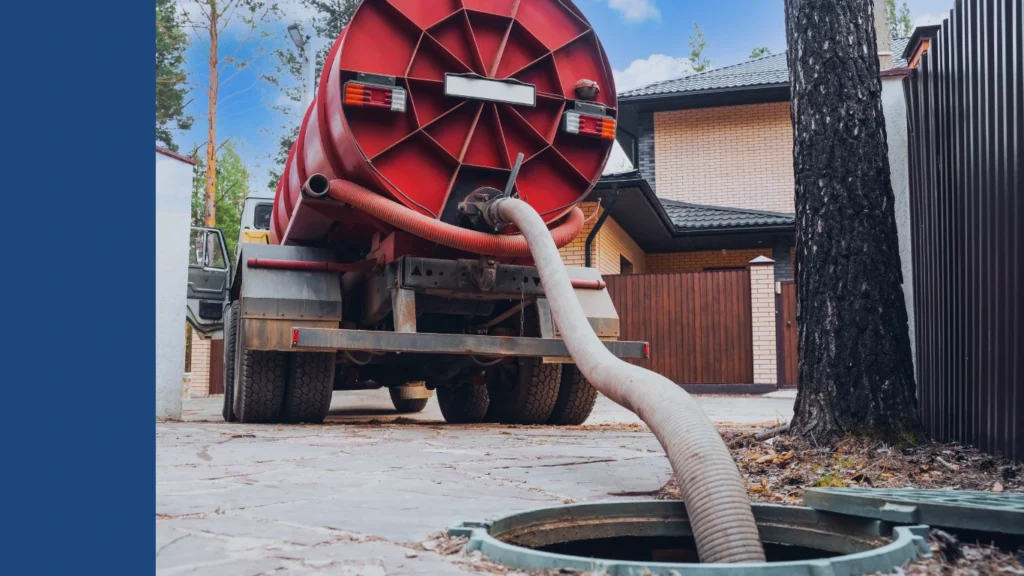
If you’ve lived on a septic system for a while, you know the deal: you don’t think about it until that one Saturday morning when the toilets won’t flush, or a suspiciously green, swampy patch appears in your backyard. Suddenly, that “out of sight, out of mind” tank is the only thing on your mind.
Sewer repairs are stressful, but septic repairs feel like a different beast because the whole system is literally sitting under your lawn. The good news? Not every gurgle means you need a $20,000 replacement. From simple $150 lid swaps to more complex $5,000 line repairs, let’s pull back the curtain on what septic repairs actually cost in 2026.
Key Takeaways
- Average Repair Cost: Most homeowners spend between $750 and $3,500 on common septic repairs.
- Minor vs. Major: Small fixes like baffles or lids are usually under $1,000, while drain field issues can easily climb to $5,000–$15,000.
- Maintenance Saves Money: Regular pumping (every 3-5 years) costs about $300–$600 and can prevent a full system failure.
- Call the Pros: Septic systems involve biohazards and heavy machinery; this is one area where DIY can lead to massive fines and environmental damage.
Table of Contents
- Common Septic Repair Costs by Component
- The “Big Ticket” Repairs: Drain Fields and Tanks
- Factors That Move the Needle on Your Quote
- Repair vs. Replace: When to Walk Away
- Final Thoughts
- Frequently Asked Questions
Common Septic Repair Costs by Component
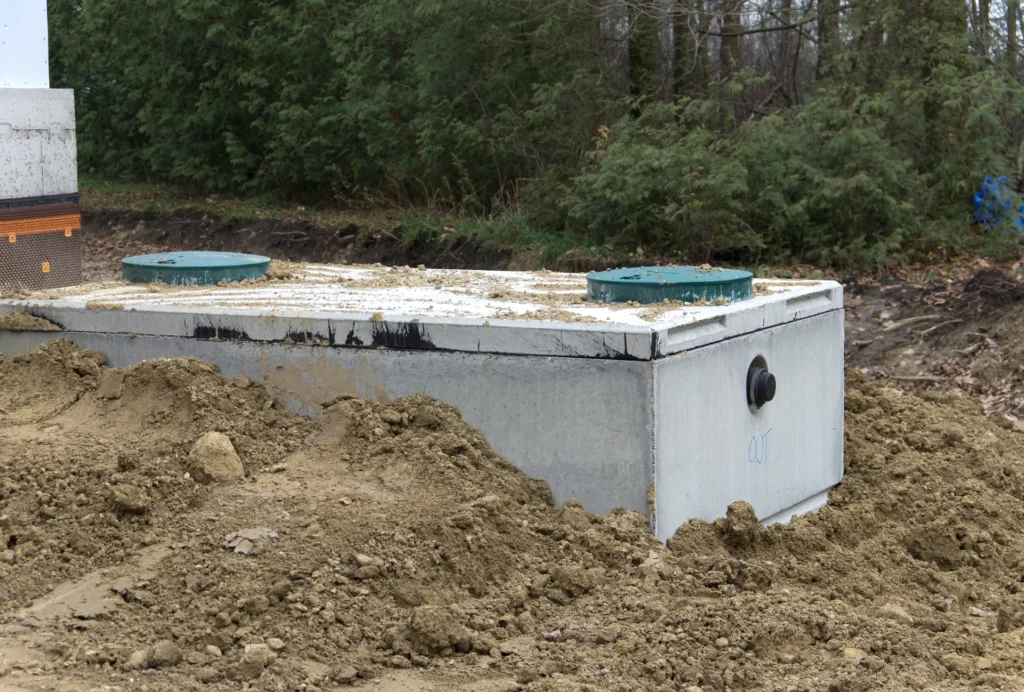
Most septic issues aren’t the “end of the world.” Often, a single component has worn out or broken. Here is a breakdown of what you can expect to pay for the most common “quick” fixes:
Repair Type | Average Cost (2026) | What it Does |
Septic Tank Lid | $150 – $500 | Keeps debris out and people (and pets!) safe. |
Baffle Replacement | $300 – $1,200 | Pipes that direct flow into and out of the tank. |
Tank Filter | $200 – $300 | Stops solids from clogging your expensive drain field. |
Septic Pump | $800 – $1,400 | Pushes waste to the drain field (if gravity isn’t doing it). |
Line Repair | $1,000 – $4,500 | Fixes the pipe between your house and the tank. |
Real-Life Example: Imagine your toilet is backing up, but only when you run the laundry. You might fear a collapsed tank, but an inspector finds a clogged outlet baffle. Replacing it for $600 solves the problem entirely, saving you from a much larger bill.
The “Big Ticket” Repairs: Drain Fields and Tanks
If the “heart” of the system—the tank—or the “lungs”—the drain field—fails, the numbers get bigger.
Drain Field (Leach Field) Rejuvenation
When a drain field gets “clogged” with biomat (a slimy buildup), it stops absorbing water. A pro might suggest rejuvenation (jetting the lines or adding bacteria), which costs $1,000 to $5,000. If the field is totally dead, a full replacement can run $7,000 to $20,000+.
Cracked or Leaking Tanks
If your concrete tank develops a crack, a professional can often seal it for $500 to $2,500. However, if the tank is old and crumbling, a full tank replacement usually lands between $3,000 and $10,000.
Factors That Move the Needle on Your Quote
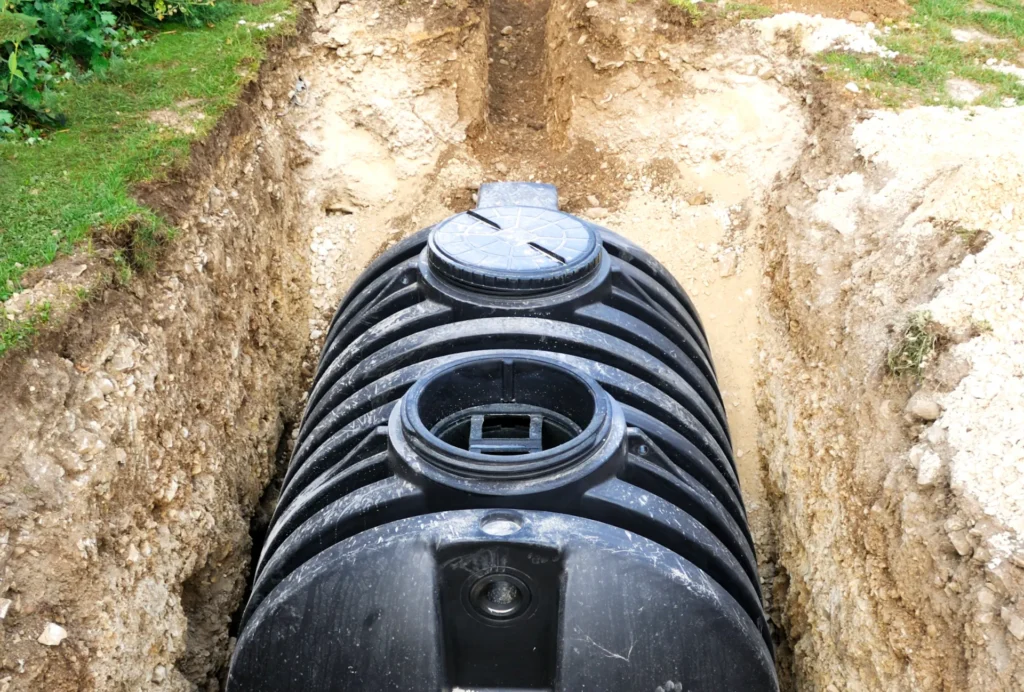
Why does one neighbor pay $800 and another pay $1,800 for the same repair? It usually comes down to these variables:
- Tank Material: Plastic and fiberglass tanks are often cheaper to repair than heavy, reinforced concrete.
- Accessibility: If your tank is buried 5 feet deep under a deck, the labor costs to “get to the problem” will skyrocket.
- Soil Conditions: In areas with heavy clay or high water tables, repairs are more complex because the ground doesn’t “behave” during excavation.
- Permits and Testing: Many states and provinces require a permit for any repair involving more than just a lid. In 2026, expect to pay $500 to $1,500 just for paperwork and inspections.
Repair vs. Replace: When to Walk Away
It’s the age-old homeowner dilemma: do you keep patching the old system or bite the bullet on a new one?
When to Repair:
- The system is less than 15 years old.
- The issue is a single, replaceable part (pump, baffle, or pipe).
- The tank is structurally sound.
When to Replace:
- Your system is over 25 years old (the average lifespan).
- You have a “manual” or “Orangeburg” (tar paper) pipe system.
- The cost of the repair is more than 50% of the cost of a new system.
Pro Tip: Always get a camera inspection first. Spending $300 on a video of your pipes can save you thousands by proving you don’t need a full replacement.
Final Thoughts
Septic repairs are never fun, but they don’t have to be a disaster. The key is to act fast—a small leak in a pipe today is a saturated, failing drain field tomorrow. Most importantly, never enter a septic tank yourself. The gases inside (like methane and hydrogen sulfide) are deadly. Always hire a licensed, insured septic professional to do the dirty work. Your health and your property value depend on it!
Frequently Asked Questions
How much does it cost to pump a septic tank in 2026?
On average, you’ll pay between $300 and $600 depending on the size of your tank (usually 1,000 to 1,500 gallons) and your location.
Can I fix a septic leak myself?
We strongly advise against it. Septic repairs require knowledge of local environmental codes and handling of raw sewage. Improperly “fixing” a leak can lead to groundwater contamination and massive legal fines.
Will my homeowners insurance cover septic repair?
Standard policies usually don’t cover wear and tear or root damage. However, if your septic system fails because of a “covered peril” (like a tree falling on it or a vehicle crushing it), you might be covered. Check if you have a “Service Line” rider for better protection.
What is the most expensive part of a septic system to fix?
The drain field is almost always the most expensive component. Because it involves extensive excavation, specialized stone/sand, and precise grading, it is the “heavy hitter” of septic costs.
Would you like me to help you find a list of certified septic inspectors in your area to get a quote?