8 Signs of a Roof Leak and What to Do About It
By the Trusted Home Quotes Editorial Team | Updated July 14, 2026
The most common signs of a roof leak are water stains on ceilings or walls, a musty smell that never quite clears, damaged or missing shingles, and dripping you can hear but not see. Here is how to read each warning sign, what it costs to fix, and when to call a roofer.
Why Your Ceiling Is Telling You Something
It usually starts small. A faint ring on the hallway ceiling that you are almost certain was not there before the storm. A spare bedroom that smells like a damp basement no matter how long you leave the window open. A slow tick in the attic on a rainy night that stops when you go up to look.
None of that is proof on its own, and none of it means your roof is failing. But water finds the path of least resistance, and by the time it reaches a surface you can see, it has usually been traveling for a while. The good news is that roof leaks announce themselves in fairly predictable ways once you know the vocabulary.
Below are eight of the most common roof leak signs, split between what you can spot indoors and what shows up outside. Each one comes with a short, specific next step so you are not left guessing.
Common Signs of a Roof Leak
1. Water Stains on Ceilings and Walls
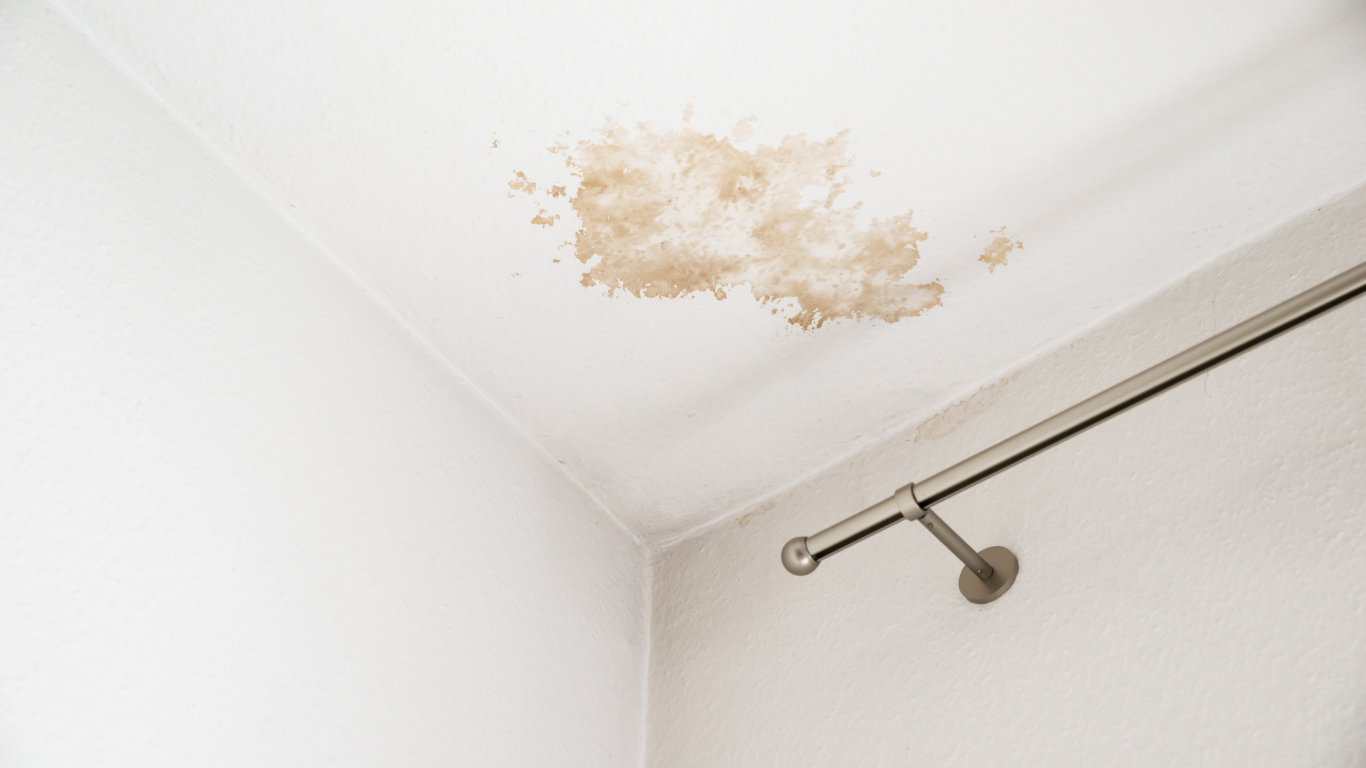
Stains are the classic tell. Look for rings with a darker outline and a lighter center, usually tan, rust-colored, or grayish. Fresh ones look damp and slightly swollen; older ones dry into a hard, chalky ring that comes back darker after every heavy rain.
Position is not proof of location. Water tends to run along the top of a rafter or truss until something interrupts it, then drops. A stain in the middle of a bedroom can trace back to a failure eight or ten feet away, often near a vent or valley.
What to do: Mark the edge of the stain with a pencil and date it. If it grows after the next rain, the leak is active and needs a roofer, not a coat of stain-blocking primer.
2. A Musty Smell That Will Not Go Away
Sometimes the nose finds it before the eyes do. Damp framing, wet insulation, and soaked drywall paper all give off a sour, earthy odor that concentrates in closets, upstairs corners, and rooms you rarely open.
If the smell is strongest near an exterior wall or gets worse in humid weather, treat it as a moisture problem rather than a housekeeping one. Air fresheners will mask it for an afternoon and tell you nothing.
What to do: Open the closet or cabinet nearest the smell and feel the wall and ceiling surfaces with the back of your hand. Cool, slightly soft drywall means moisture is present and the source needs tracing.
3. Dripping Sounds or Damp Insulation in the Attic
The attic is where a leak is youngest and easiest to read. On a dry day, go up with a flashlight and look at the underside of the roof deck, called the decking or sheathing, for dark streaks, white mineral trails, or wood that looks stained in a fan pattern. Then check the insulation underneath for matted, compressed, or discolored patches.
Sound is a clue too. Intermittent dripping during rain, especially near a chimney or plumbing stack, points to an active attic leak. So does daylight showing through anywhere it should not.
What to do: Photograph the wet area and the nearest roof penetration, then measure the distance from a gable end or ridge so a roofer can find the same spot from the outside.
4. Bubbling Paint, Sagging Drywall, or Peeling Wallpaper
Before drywall stains, it often deforms. Paint blisters into small bubbles, seams crack in a straight line, wallpaper lifts at an edge, or a section of ceiling develops a shallow belly you notice only when the light hits it sideways.
A sagging ceiling is the one sign on this list that deserves same-day attention. Saturated drywall gets heavy fast, and a bulge means water is pooling above it rather than spreading out.
What to do: Clear the area underneath, put down a bucket and a tarp, and call a roofer. Do not puncture a bulging ceiling unless you have somewhere for a sudden gallon of water to go.
5. Damaged or Missing Shingles
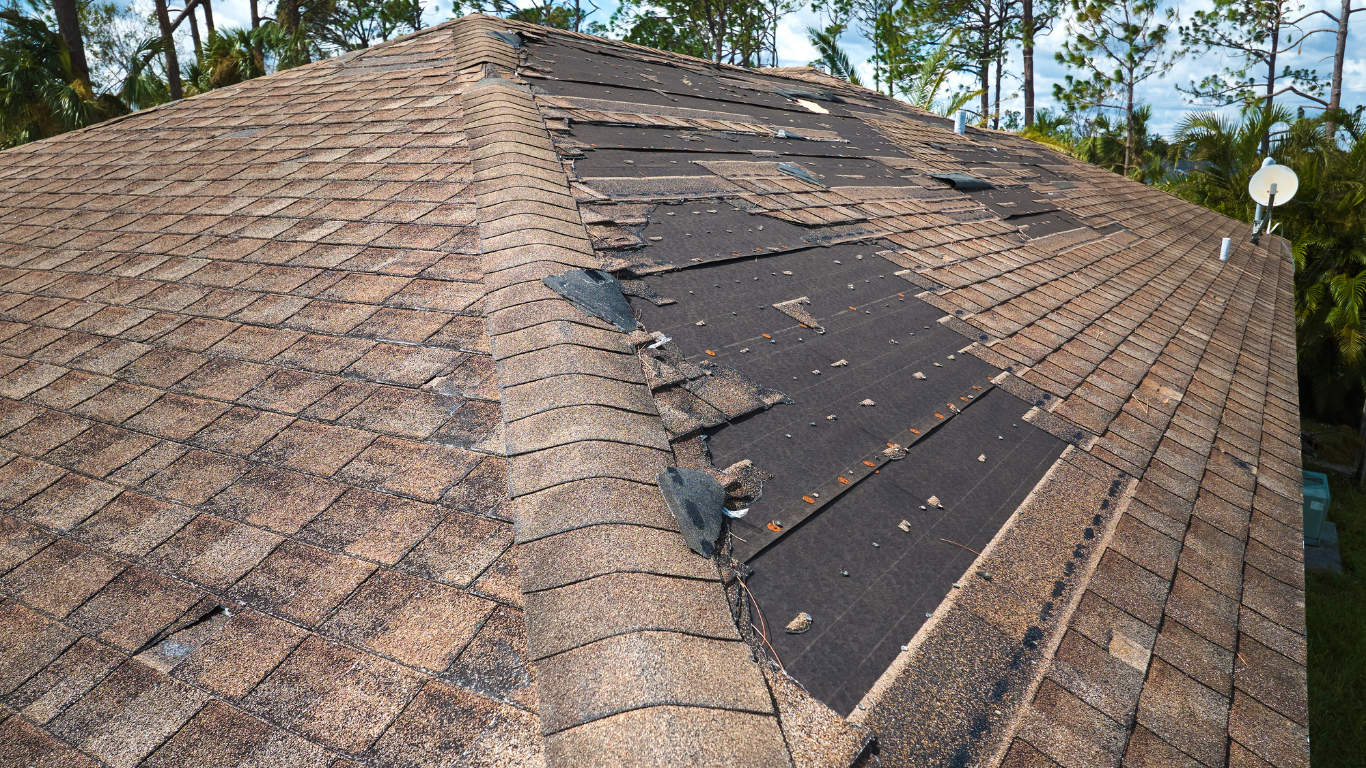
This is the exterior sign most homeowners can check safely from the driveway with a pair of binoculars. Scan for gaps, shingles that have curled up at the corners, tabs lifted by wind, cracks running across a course, and bald spots where the protective granules have worn off.
Granule loss deserves a second look. Finding what looks like coarse black sand at the bottom of your downspouts is normal on a brand-new roof and a warning sign on a fifteen-year-old one. IBHS storm research notes that aging asphalt shingles can fail at wind speeds well below hurricane strength, which lets wind-driven rain in through openings you would never see from the ground.
What to do: Walk the perimeter after any storm with high wind or hail and photograph anything that looks out of place. Shingle repairs are among the cheapest fixes on the list when they are caught early.
6. Damaged, Rusted, or Missing Flashing
Flashing is the thin metal that seals the joints where your roof meets something else: chimneys, skylights, dormer walls, and the valleys where two slopes come together. It does more work than any single shingle, and it fails more often.
Look for metal that has lifted at the edges, rusted through, pulled loose from its fasteners, or lost the sealant along its top edge. Chimneys are a particularly common culprit because the masonry and the roof move at different rates over the years, and step flashing that was originally tucked into the mortar works its way loose.
What to do: Flashing is a repair, not a replacement, in most cases. Ask specifically whether the roofer plans to re-flash the detail properly or simply seal over it, because sealant alone rarely holds more than a season or two.
7. Cracked Vent Boots and Popped Nails
A vent boot is the rubber or synthetic collar that wraps the base of the plumbing pipe sticking out of your roof, forming a watertight seal where the pipe passes through. Sun and temperature swings make that collar brittle, and once it splits, water runs down the outside of the pipe and straight into the ceiling below.
Nail pops are the quieter cousin. When roof decking expands and contracts, fasteners can back out and lift the shingle above them, creating a pinhole entry point. A single popped nail can produce a stain the size of a dinner plate.
What to do: Boots and nails are inexpensive fixes, often at the very low end of any repair estimate. Ask your roofer to inspect every penetration on the roof while they are up there, not just the one above the stain.
8. Standing Water, Ice Dams, and a Sagging Roofline
Roofs are designed to shed water, not hold it. Ponding water, meaning puddles that linger more than a day or two after rain, shows up mostly on flat and low-slope sections and points to a drainage or settling problem. On a pitched roof, a visible dip or wave in the roofline suggests the decking underneath has softened.
In cold climates the winter version is the ice dam: a ridge of ice that forms at the eave when heat escaping into the attic melts snow higher up, which then refreezes at the colder edge. University of Minnesota Extension research traces the cause to attic heat loss rather than the gutters themselves, and the trapped meltwater behind the dam gets pushed back under the shingles.
What to do: Clear debris from gutters and downspouts so water has somewhere to go. If the roofline itself is sagging, skip the DIY and book an inspection, since that is a structural question rather than a surface one.
Why a Roof Leak Is Dangerous
A leak is rarely a single problem. It is one problem that quietly creates several others.
- Structural damage. Wet decking softens, loses its grip on fasteners, and eventually rots. Rafters and trusses that stay damp follow. This is the difference between a $400 repair and a five-figure one.
- Ceiling and drywall failure. Saturated drywall sags, crumbles at the seams, and in the worst cases comes down in sheets. Insulation that gets wet also mats down and stops insulating.
- Electrical hazards. Attics are full of wiring, junction boxes, and recessed light housings. Water traveling along a ceiling often ends up inside a fixture, because the weight of the fixture creates a low point.
- Mold and indoor air quality. Damp drywall, insulation, and framing are exactly what mold needs. EPA guidance on mold and indoor air quality says that drying affected materials within 24 to 48 hours usually prevents growth. Past that window, spores have everything required to take hold.
DIY vs. Hiring a Roofer
There is real work a homeowner can do here, and there is work that is not worth the risk. The dividing line is simple: everything from the ground and the attic is fair game, and everything on the roof surface is not.
Reasonable to do yourself: binocular inspection from the yard, a walk-around after storms, an attic check with a flashlight, clearing gutters from a stable ladder, photographing damage, and monitoring whether a stain is growing.
Call a professional for: anything involving climbing onto the roof, flashing and chimney work, vent boot replacement, decking repair, tarping, and any leak whose source you cannot confidently identify. Roofers use water testing, moisture meters, and sometimes infrared to find entry points that are not visible.
The safety case is worth stating plainly. Roof surfaces are slick when damp, steeper than they look from the ground, and unforgiving of a misstep, and a compromised deck may not hold your weight where it looks solid. The NRCA advises homeowners to have a qualified contractor handle inspection and repair work rather than attempting it themselves.
One more thing worth doing after the repair: wait for the next two heavy rains before you patch and repaint the ceiling. If the roofer chased a symptom rather than the source, you would rather find out before you have finished the drywall.
How Much Roof Leak Repair Costs
Most homeowners pay between $350 and $1,500 to repair a roof leak in 2026, with a national average around $800. Simple fixes at an accessible penetration can come in near $100, while a leak that has been running long enough to rot the decking and framing underneath can climb to $8,000 or more. Roof material matters too, since slate, tile, and metal all cost more to repair than asphalt shingle.
Two factors move these numbers more than anything else. Labor is roughly 60% of a typical bill, so steep or complex roofs cost more simply because they take longer and require more equipment. And timing matters: emergency and after-hours calls carry a premium, which is one more argument for acting on a small stain instead of waiting for a downpour. If your roof is nearing the end of its life or you are weighing a longer-term fix, it is worth comparing repair costs against metal roof costs before committing to another patch.
Does Homeowners Insurance Cover Roof Leaks?
Usually it depends on one question: was the damage sudden, or was it slow? Standard policies are built to cover sudden, accidental losses from a named peril such as wind, hail, a fallen tree limb, or fire. Damage that developed gradually from age, wear, or deferred maintenance is typically excluded, and a roof at the end of its service life is often treated as the homeowner’s responsibility.
Water damage is not a rare claim. Industry figures from the Insurance Information Institute show that roughly one in 60 insured homes files a property damage claim for water damage or freezing each year, which is part of why adjusters look closely at cause and timeline.
That is where documentation earns its keep. Dated photos from before and after a storm, a written inspection report naming the cause, and receipts for routine maintenance all help establish that the loss was sudden rather than neglected. Report the claim promptly, keep damaged materials until the adjuster has seen them, and hold off on permanent repairs until you have the go-ahead.
How to Prevent Roof Leaks
Prevention is mostly a calendar problem. Very little of it is expensive, and almost all of it beats the alternative.
- Inspect twice a year. The NRCA recommends biannual inspections, typically spring and fall, to catch cracked shingles, loose flashing, and granule loss before they become entry points. Planning ahead helps here, and our roof inspection cost guide covers what to budget.
- Clean gutters at least twice a year. Overflowing gutters push water back under the roof edge and into the fascia. Fall and late spring are the two that matter most, and gutter cleaning costs are modest compared with what backed-up water does. If your gutters are pulling away or rusting through, look at gutter replacement instead of patching.
- Ventilate and air-seal the attic. Good ventilation and sealed ceiling penetrations keep the roof deck cold in winter, which is the single best defense against ice dams, and keep humidity down the rest of the year.
- Do a post-storm walk-around. After high wind or hail, spend ten minutes looking for displaced shingles, dented vents, and granules in the downspout splash zone.
- Stay ahead of flashing and sealant. Caulk and roof cement have a shelf life measured in a few years, not decades. Have the sealant at chimneys, skylights, and vents refreshed as part of routine maintenance.
- Trim overhanging branches. Limbs that scrape the roof strip granules, and limbs that fall do considerably worse. Roof shape plays a role in how debris collects, too, which our guide to types of gable roofs gets into.
Questions to Ask a Roofer Before Hiring
A short list of questions separates a diagnostic roofer from someone selling you a patch.
- Are you licensed and insured in this state, and can I see current certificates for both general liability and workers’ compensation?
- What warranty comes with the repair itself, in writing, and how long does it run?
- Will I get a written scope of work and photos of what you found, not just a price?
- How did you determine the source of the leak, and how confident are you that this is the entry point rather than where the water surfaced?
- Will you come back and re-check after the next heavy rain if the stain reappears?
- Are permits required for this work, and who is pulling them?
Get at least three quotes and compare the diagnosis, not only the number. Two estimates that describe different causes are telling you something useful about who actually investigated.
Frequently Asked Questions
How do you know if your roof is leaking?
Look for water stains on ceilings or walls, a musty smell, bubbling paint, and damp or matted attic insulation. Outside, check for missing shingles, lifted flashing, and cracked vent boots. A stain that darkens or spreads after rain confirms the leak is active.
How long can a roof leak go unnoticed?
Months, and sometimes years. Water can soak insulation and decking long before it reaches a visible surface, especially in a well-insulated attic that absorbs moisture quietly. Twice-yearly attic checks and post-storm inspections are the most reliable way to catch a slow leak early.
Does homeowners insurance cover a roof leak?
Typically yes when the cause is sudden and accidental, such as wind, hail, or a falling limb. Coverage is usually denied when the leak stems from age, wear and tear, or deferred maintenance. Dated photos and a written inspection report strengthen your claim considerably.
Can a roof leak without any visible damage?
Yes. Failed sealant, a hairline crack in flashing, a popped nail, or a split vent boot can all admit water while the roof looks fine from the ground. This is why interior signs like odor and damp insulation matter as much as exterior ones.
How much does it cost to fix a roof leak?
Most roof leak repairs cost $350 to $1,500 in 2026, averaging around $800. Minor fixes such as a vent boot or a few shingles can run near $100 to $450, while leaks that have damaged decking or framing can reach $8,000 or more.
Do I need to replace my ceiling after a roof leak?
Not always. Lightly stained drywall that dried within a day or two can often be sealed and repainted. Drywall that sagged, crumbled, softened at the seams, or grew mold should be cut out and replaced, along with any insulation above it.
You Might Also Like
- How Much Does a Roof Inspection Cost in 2026?
- Gutter Cleaning Costs in 2026: A Homeowner’s Guide
- How Much Does a Metal Roof Cost in 2026?
- 7 Types of Gable Roofs: Which One Is Right for Your Home?
Get Your Roof Looked At Before the Next Storm
A stain you catch this month beats a ceiling you replace next year. If any of these signs sound familiar, compare free quotes from trusted local roofers through Trusted Home Quotes. There is no obligation and no pressure, just vetted pros in your area who can tell you what is actually going on up there. While you are here, browse our other home project guides to plan your next repair with confidence.