8 Common Toilet Problems and How to Fix Them
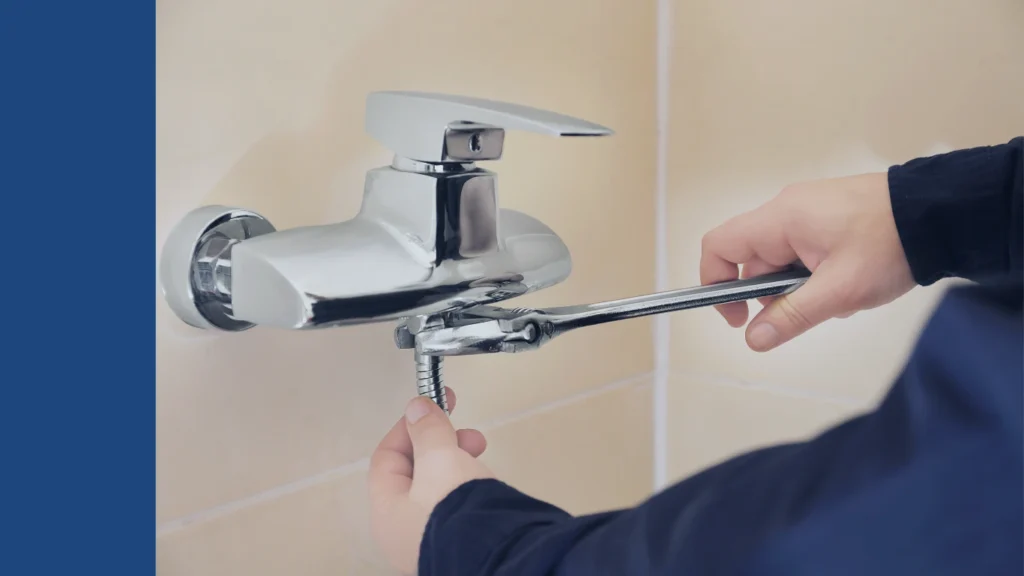
Most of these you can handle yourself in under an hour here is how to tell which ones you should not.
By the Trusted Home Quotes Editorial Team
Key Takeaways
- Clogs are the single most common toilet problem, and most clear with a plunger before any other tool comes out.
- Most professional toilet repairs land between $100 and $400 in 2026, with the typical job closer to $150 to $250.
- A toilet that will not stop running almost always comes down to one of two parts: the flapper or the fill valve.
- Close the shutoff valve behind the toilet before any repair.
- Call a plumber when the symptom shows up in more than one fixture, when water returns at the base after a reset, or when you smell sewage.
A toilet looks simple, but a handful of small parts do all the work, and each one wears out in its own way. Common toilet problems range from a loose seat or a running tank to clogs and leaks that need a plumber.
Most are fixable in under an hour with basic tools. Here are the eight you are most likely to run into, how to fix each one, and when to call a pro.
1. Clogged Toilet
A clog means something is blocking the flow of water through the toilet and into the drain. Too much paper is the usual cause, followed by wipes labeled flushable, which do not break down the way toilet paper does. Toys, cotton pads, and dental floss account for most of the rest. The bowl either drains slowly or backs up toward the rim.
How to Fix It
If the water is high, do not flush again. Close the shutoff valve and wait ten minutes for the level to drop. Seat the plunger so the sleeve sits inside the drain opening, push down gently on the first stroke to release trapped air, then work it firmly ten to fifteen times without breaking the seal. The clog is clear when the bowl drains on its own.
If plunging fails, feed a toilet auger into the trap and crank until it catches, then pull back slowly to retrieve the obstruction rather than pushing it deeper. Skip chemical drain openers they sit in the trap instead of flowing through. When the auger comes back clean and the clog remains, or the same toilet clogs every few weeks, the problem is further down the line. That is when what hydro jetting involves is worth reading, and you can compare quotes from local pros before booking anyone.
2. Toilet That Will Not Stop Running
A running toilet is the most expensive small problem in the house. The EPA notes a worn flapper can silently waste thousands of gallons a year. Two parts cause nearly all of it, and the tank tells you which.
Take the lid off and look at the water level. If it is at the normal fill line and draining into the bowl, the flapper is not sealing. If water is climbing above the overflow tube and spilling down it, the fill valve is not shutting off.
How to Fix It
For a flapper, shut the water, drain the tank, unhook the chain, and slide the old flapper off its pegs. Take it to the store rather than guessing, since flappers are not universal. A replacement runs $5 to $15. Leave about a half inch of chain slack, and run a finger around the seat while the tank is empty mineral grit there will defeat a brand-new flapper.
For a fill valve, adjust first. Most modern valves have a clip on the float cup; older ball-float assemblies have a screw on the arm. Set the water to stop about an inch below the top of the overflow tube. If it still runs, replace the valve $12 to $25 and about twenty minutes. If a new flapper and a new fill valve both fail, the flush valve seat is likely cracked, which means pulling the tank off the bowl.
3. Weak or Incomplete Flush
The toilet flushes, but slowly, or takes two tries. The tank usually is not filling high enough, or the chain has enough slack that the flapper drops before the tank empties. A partial clog or mineral scale in the rim jets can do it too.
How to Fix It
Check the water level against the fill line marked inside the tank. If it is low, raise the float until water stops about an inch below the overflow tube. Then take up chain slack to roughly a half inch enough that the flapper seats fully without the handle traveling loose.
If the level and chain are fine, plunge once in case something is restricting flow. Still weak? Hold a mirror under the rim and look at the jet holes. Crusted-over jets mean hard water, and a stiff wire plus a vinegar soak reopens them. If the tub and sink also drain slowly, the problem is the drain line, not the toilet.
4. Toilet That Fills Slowly
The tank takes minutes to refill instead of seconds. The most common cause is also the most overlooked: a shutoff valve that was never reopened all the way after an earlier repair. Debris in the fill valve, a waterlogged float ball, or a kinked supply line account for the rest.
How to Fix It
Open the shutoff valve counterclockwise until it stops, then flush and time the refill. That solves it more often than you would expect.
If not, clean the fill valve. Shut the water off, twist the cap off the top of the valve, hold an upturned cup over the opening, and briefly open the supply to blow grit out. If the float ball feels heavy or sloshes, replace it they are a few dollars and thread right on. In hard-water areas, scale rebuilds every few years regardless, and a water softener installation may cost less over time than repeated valve replacements. If every fixture in the house runs weak, it is supply pressure, not the toilet.
5. Loose, Stuck, or Unresponsive Handle
This is the original jiggle-the-handle problem. The lever flops with no resistance, sticks down, or moves normally while nothing happens in the tank. Everything responsible is visible with the lid off: the chain, the lift arm, or the mounting nut.
How to Fix It
Flush while you watch. If the lift arm moves but the flapper does not, the chain has come unhooked, tangled, or stretched. Reattach it to the hole that leaves about a half inch of slack. Plastic lift arms go brittle after a decade to replace one that is split.
If the handle is loose at the tank, tighten the mounting nut on the inside. This nut is reverse threaded, so it tightens counterclockwise. Snug it by hand plus a small nudge with a wrench. Overtightening cracks tanks, and a cracked tank cannot be repaired.
6. Toilet Leaking at the Base, Tank, or Supply Line
Find the source before fixing anything, because three different leaks look identical once water reaches the floor. Dry everything, lay a paper towel under the supply valve and around the base, and check after a few flushes and again after an hour of no use.
- Wet at the supply nut all the time the supply line connection or valve packing.
- Streaking down the back of the bowl right after a flush the tank-to-bowl bolts or spud washer.
- Water at the base after each flush, with a darkening ring or a rocking toilet — the wax ring, the seal between the toilet base and the drain flange.
- Beads over the whole tank on humid days condensation, not a leak.
How to Fix It
For the supply line, shut the water, unthread the nut, and check that the rubber gasket is intact and seated. Retighten firmly by hand plus a quarter turn. A corroded or bulging braided line should just be replaced; a new one is $10 to $15.
For tank-to-bowl bolts, tighten evenly a little at a time and stop when they feel snug. If that does not work, replace the bolt set and spud washer instead of cranking harder.
The wax ring is real work: drain the tank, disconnect the supply, pull the closet bolts, and lift a 60- to 100-pound fixture straight up. Then scrape both surfaces clean, set a new ring, and lower the toilet squarely one wobble and you start over with a fresh ring. Experienced DIYers manage it. It is also a reasonable job to hand off, since a plumber can tell you whether the flange underneath is cracked or sitting below the floor, which is the real cause about as often as the ring. Call one right away if the flooring feels soft, the ceiling below is stained, or you smell sewage.
7. Gurgling or Bubbling Toilet
Gurgling is air moving where it should not. Your drains need a vent a pipe running up through the roof that lets air in behind draining water. When that vent is blocked, or a partial blockage downstream pushes air backward, it surfaces through the toilet’s trap as bubbles. This one escalates faster than the others because the cause usually sits in shared drainage rather than the toilet.
How to Fix It
Flush and listen at the tub and sink. If they gurgle too, the problem is the main line or the vent, and that is a plumber’s call. If only the toilet gurgles, plunge it and run an auger through the trap.
On a septic system, check service history first. A tank that has not been pumped in three to five years backs pressure up the line, and gurgling is often the first sign. Septic tank pumping costs are modest next to a backup. Vent stacks do block with leaves or nests, but clearing one means working over an open pipe on a roof.
8. Cracked Seat, Bowl, or Tank
A hairline crack above the waterline may sit unchanged for years. A crack below the waterline, or anywhere on the bowl, is a countdown. Porcelain does not fail gradually it holds and then it does not, and a tank that lets go empties at once while the fill valve keeps feeding it.
How to Fix It
There is no reliable repair for cracked china. Epoxies sold for it buy days, not seasons.
A cracked seat is the easy case and not a plumbing issue. Pry open the bolt caps, unscrew the bolts, and drop in a new seat for $20 to $40. Measure round versus elongated before you buy. A cracked tank can occasionally be replaced alone if the model is current, though matching a discontinued tank is often harder than replacing the whole fixture. A cracked bowl means a new toilet, at $350 to $900 installed. If yours predates 1994, there is an upside: the EPA notes toilets use nearly 30 percent of a home’s indoor water, and a modern model saves a family roughly 13,000 gallons a year. If the swap is part of a larger update, talk to bathroom pros in your area first.
Also Worth Checking
- A sweating tank. Condensation drips onto the floor and reads exactly like a base leak. A tank liner kit or a working exhaust fan solves it.
- A rocking toilet. Movement grinds the wax ring flat. Tighten the closet bolts evenly, and shim any gap before tightening further.
- Phantom flushing. The tank refills briefly every 10 to 30 minutes with nobody in the room — a slow flapper leak. Same $6 part.
- Silent leaks. Put food coloring in the tank and do not flush for 20 minutes. Color in the bowl means the flapper is passing water.
Toilet Repair Costs at a Glance
Typical 2026 U.S. ranges including parts and labor during standard business hours. The DIY figure is the part alone.
Repair | Typical 2026 cost |
|---|---|
Flapper replacement | $50–$150 professionally ($5–$15 DIY) |
Fill valve replacement | $60–$200 ($12–$25 DIY) |
Flush handle or lift arm | $50–$125 |
Supply line replacement | $50–$150 |
Shutoff valve replacement | $100–$250 |
Wax ring replacement (toilet pulled and reset) | $150–$300 |
Clog clearing / auger service call | $100–$400 |
Main drain or sewer line clearing | $300–$900 |
Toilet replacement (fixture plus installation) | $350–$900 |
Labor and fees. Standard residential plumber rates run roughly $75 to $150 per hour in 2026. Expect a service call or trip fee of $50 to $150, which many companies fold into the first hour or waive if you proceed. After-hours and weekend calls commonly run 1.5 to 3 times standard rates. For context, the Bureau of Labor Statistics puts the median plumber wage at $62,970 a year.
When to Call a Plumber
- The same drain clogs repeatedly, or clogs move between fixtures.
- Sewage odor anywhere in the bathroom.
- Water at the base returns after a new wax ring.
- Tubs or sinks gurgle when the toilet flushes.
- Anything behind a wall or under a slab.
A supply line that fails under pressure moves several gallons a minute into a room with no drain, and the subfloor absorbs it long before anyone notices. A wax ring that has been weeping for a year can rot the floor around the flange until the toilet has nothing solid to bolt to. Neither looks like much on day one.
If the trouble has moved past the fixture, it helps to know what you are looking at before the quotes come in a leaking sewer pipe and trenchless sewer repair are both worth understanding first.
How to Prevent Common Toilet Problems
- Flush only waste and toilet paper. Wipes, paper towels, cotton products, and floss all cause clogs.
- Replace the flapper every five years, before it leaks rather than after.
- Run a dye test twice a year to catch silent leaks.
- Exercise the shutoff valve annually so it is not seized when you need it.
- Watch the water bill. Household leaks account for nearly 900 billion gallons of waste a year nationwide.
Questions to Ask Before Hiring a Plumber
- Are you licensed and insured in this state, and can I see both?
- Is this flat-rate or hourly, and what is the minimum charge?
- Is there a diagnostic fee, and does it apply toward the repair?
- What warranty covers the parts, and what covers your labor?
- Can I have a written estimate before work starts?
- If the scope changes once the toilet is off the floor, how do you handle approval?
How Trusted Home Quotes Researches Repair Costs
Our figures come from national cost databases, published contractor pricing, and government sources including the EPA and the Bureau of Labor Statistics. We present ranges rather than single numbers because plumbing labor varies more by region than almost any other trade.
Ranges are a starting point, not a quote. The most reliable way to know what your repair costs is to compare a few quotes from plumbers who work in your area.
Frequently Asked Questions
What is the most common toilet problem?
Clogs are the most common toilet problem, followed closely by a worn flapper causing the toilet to run. Both are usually DIY fixes: a flange plunger clears most clogs, and a replacement flapper costs about $6. Older toilets with narrower trapways clog more often than modern ones.
Why does my toilet keep running after flushing?
Either the flapper is not sealing or the fill valve is not shutting off. Lift the tank lid: if water is draining into the bowl at a normal level, replace the flapper. If water is spilling into the overflow tube, lower the float or replace the fill valve. Both are under $25 in parts.
How much does it cost to fix a toilet?
Most professional toilet repairs run $100 to $400 in 2026, with the typical job around $150 to $250. Simple part swaps like a flapper or fill valve sit at the low end. Pulling and resetting the toilet for a wax ring runs $150 to $300, and full replacement is $350 to $900 installed.
Can I fix a leaking toilet myself?
Often, yes it depends where the leak is. Supply line connections and tank-to-bowl bolts are straightforward with an adjustable wrench. A base leak means replacing the wax ring, which requires lifting the toilet. If the floor feels soft or the ceiling below is stained, call a plumber.
Why is my toilet gurgling?
Gurgling means air is being forced through the trap, usually because a drain vent is blocked or something is partially obstructing the line downstream. If only the toilet gurgles, plunging or augering may clear it. If tubs and sinks gurgle too, the problem is in the main line.
How long does a toilet last before it needs replacing?
The porcelain fixture often lasts 25 to 50 years, while the working parts inside the tank need replacing every 4 to 6 years. Most toilets get replaced for cracks, chronic leaks, or water efficiency rather than age; a pre-1994 model uses up to 3.5 gallons per flush versus 1.28 today.